To build a custom product catalog for a POD store, group products into clear categories, standardize variants and print areas across similar items, attach templates and mockups, and apply consistent pricing rules. A well-structured Printcart catalog keeps the storefront, product designer, and fulfillment reading from one reliable source.
Key takeaways
What makes a good POD product catalog?
A product catalog is the organized set of products a store sells, with their variants, print areas, images, and prices. A good POD catalog is not just a long product list, it is structured so the storefront, the product designer, and fulfillment all pull from the same clean data. When catalog structure is consistent, adding products and scaling the store is fast; when it is ad hoc, every new product becomes a manual project.
Your catalog is the layer everything else depends on. Pricing, personalization, and order routing all read from it, so time invested in structure here pays back across the whole store.
How do you build a custom catalog in Printcart?
Step 1Group products into categories
Organize products into categories that match how customers shop, such as apparel, drinkware, home decor, or business print. Clear categories improve navigation, internal linking, and merchandising. Decide the grouping before you add products so structure stays consistent.
Step 2Standardize variants and print areas
Define a repeatable variant and print-area pattern for each product family, so all t-shirts share the same size logic and all mugs share the same print area. Standard patterns make the catalog predictable and cut setup time on every new item. For the detailed mechanics, see the guide on configuring print product options, variants, and print areas.
Step 3Attach templates and mockups
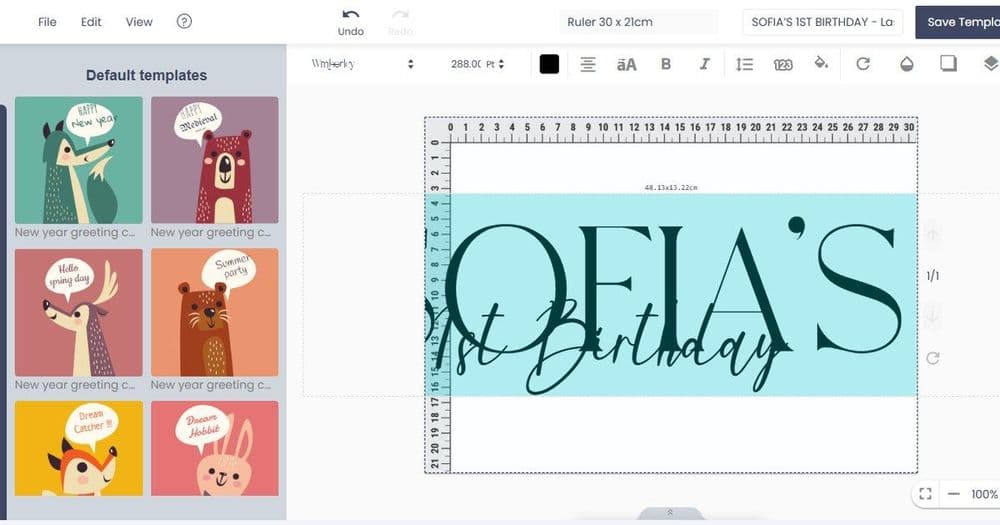
Give each product starting templates and accurate mockups so customers see a realistic result and start from a good design. Templates from your template library also keep customer output consistent and reduce artwork problems. Pull ready assets from the Printcart template library.
Step 4Apply consistent pricing rules
Set pricing rules per product family rather than per individual product where possible, so premium sizes, materials, and add-ons are costed consistently. Consistency here protects margin as the catalog grows.
Step 5Review before publishing
Check that every product has correct variants, print areas, images, and price, and that categories are complete. A catalog review before launch prevents broken products from reaching customers.
How should you organize a catalog by product family?
Use this pattern to keep similar products consistent as you scale.
| Product family | Standard variants | Print area pattern |
|---|---|---|
| Apparel | Size, color, fit | Front, back, sleeve as sold |
| Drinkware | Size, color, handle style | Wrap or single-panel area |
| Home decor | Size, material, orientation | Full-face print area |
| Business print | Stock, size, quantity tier | Front and back with margins |
How big should your launch catalog be?
Start narrow. A launch catalog of a focused set of products you can fulfill reliably beats a large catalog you cannot support. A tight catalog is easier to QA, price, and merchandise, and you can expand once fulfillment and demand are proven. Depth in a few strong categories usually converts better than breadth across many weak ones.
How does the catalog connect to the rest of the store?
- Product designer reads print areas and templates from the catalog, so personalization stays inside safe zones.
- Pricing applies option rules from the catalog to protect margin across variants.
- Fulfillment uses catalog SKUs and files to route orders to the right printer.
- Merchandising uses categories for navigation and internal links.
How do you keep a growing catalog consistent?
Catalogs drift as they grow, and inconsistency is where problems compound. Prevent it with a few rules from the start. Use product families as templates so every new item inherits a proven variant and print-area pattern rather than a one-off structure. Keep category names and option labels standardized so navigation and internal linking stay clean. Apply pricing at the family level so premium sizes, materials, and add-ons are costed the same way everywhere. And review new products against the same publishing checklist you used at launch. Consistency also helps discovery: well-structured categories create predictable URLs and internal links that both shoppers and search engines can follow, which matters as your catalog becomes a larger share of your store's indexed pages.
Next best step
With the catalog built, add customer personalization using the guide on setting up the online product designer. If you are importing a large or complex catalog, Printcart offers a print product options and pricing setup service that handles catalog structure, variants, print areas, and pricing. Browse existing structures in the Printcart product catalog.
Build a catalog customers can personalize. Create a free Printcart account to structure your catalog, or talk to the Printcart team for a guided catalog setup.
Printcart field note
What to verify before you roll out Building a Custom Product Catalog for POD Stores
This tutorial is written from Printcart implementation patterns across catalog structure, design controls, and customer personalization. Before treating it as complete, test the workflow with one real product, one real design file, and one real order path.
Building a Custom Product Catalog for POD Stores — common questions
What makes a good POD product catalog?
A product catalog is the organized set of products a store sells, with their variants, print areas, images, and prices. A good POD catalog is not just a long product list, it is structured so the storefront, the product designer, and fulfillment all pull from the same clean data. When catalog structure is consistent, adding products and scaling the store is fast; when it is ad hoc, every new product becomes a manual...
How should you organize a catalog by product family?
Use this pattern to keep similar products consistent as you scale.
How big should your launch catalog be?
Start narrow. A launch catalog of a focused set of products you can fulfill reliably beats a large catalog you cannot support. A tight catalog is easier to QA, price, and merchandise, and you can expand once fulfillment and demand are proven. Depth in a few strong categories usually converts better than breadth across many weak ones.
How do you keep a growing catalog consistent?
Catalogs drift as they grow, and inconsistency is where problems compound. Prevent it with a few rules from the start. Use product families as templates so every new item inherits a proven variant and print-area pattern rather than a one-off structure. Keep category names and option labels standardized so navigation and internal linking stay clean. Apply pricing at the family level so premium sizes, materials, and...
Next steps in Printcart
Connect building a custom product catalog for pod stores with catalog setup, templates, production workflows, and implementation support.
Want to put building a custom product catalog for pod stores into practice?
Use the related Printcart tool below, or create a free account to start building with the product designer.