To turn an offline print shop into a web-to-print store, digitize your existing catalog, add an online product designer for customer artwork, structure print options and pricing, and connect the store to your production workflow. With Printcart, local printers can take online orders that arrive print-ready, reducing back-and-forth on files.
Key takeaways
What does moving a print shop online actually involve?
Web-to-print means customers order printed products online and can personalize them before checkout, with artwork arriving ready for production. For an existing print shop this is less about starting over and more about putting the work you already do behind a storefront. You keep your products, print methods, and customers, and add online ordering, a product designer, and structured pricing so files arrive correct instead of by email.
The advantage over a pure startup is real: you already know your products, costs, and turnaround. The task is translating that operational knowledge into catalog structure, print options, and a designer that enforces print-ready files.
How do you move your print shop online with Printcart?
Step 1Digitize your existing catalog
Take the products you already print, business cards, flyers, signage, apparel, labels, and set them up as an online catalog with real variants and print areas. Start with your highest-volume products, not your entire price list. Follow the guide on building a custom product catalog to structure them.
Step 2Add an online product designer
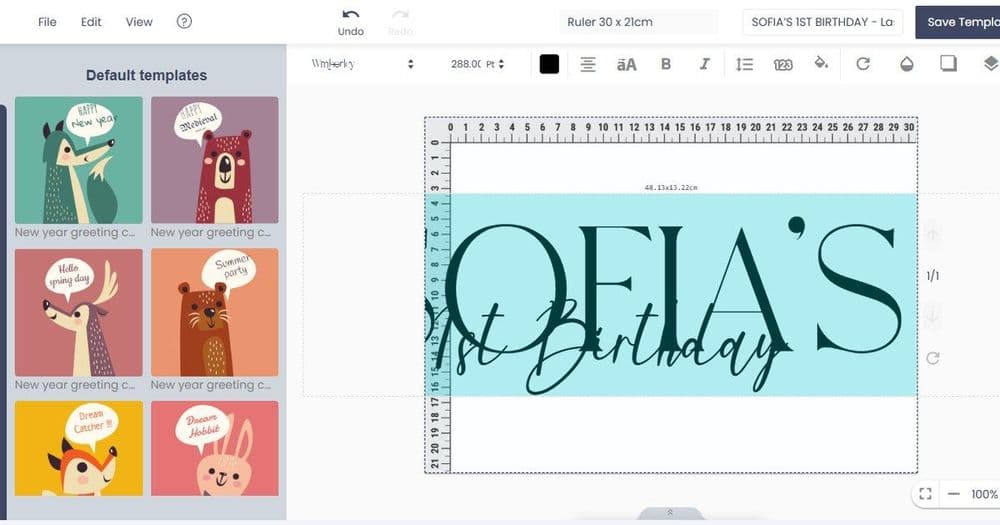
Let customers upload artwork or personalize templates online, inside print areas you control. This is what replaces email file exchange: the designer enforces safe zones and resolution so what the customer approves is what you print. See setting up the online product designer for the setup detail.
Step 3Structure print options and pricing
Recreate your real pricing online, stock, size, sides, finishes, and quantity tiers, as structured options so quotes become instant online prices. This is where print shops gain the most: pricing that used to be a phone call becomes a self-serve checkout.
Step 4Connect production
Route online orders into your existing production workflow with print-ready files and the specs your team already uses. Confirm how files hand off to your equipment or team before going live.
Step 5Pilot with real customers
Open the store to a few known customers first, take real orders, and confirm files, pricing, and turnaround hold up. Expand once the online-to-production path is proven.
What changes when a print shop goes online?
This comparison shows what web-to-print replaces in a traditional print shop workflow.
| Workflow step | Traditional print shop | Web-to-print store |
|---|---|---|
| Quoting | Phone or email per job | Instant online price from structured options |
| Artwork | Files emailed back and forth | Customer designs or uploads inside print areas |
| Approval | Manual proof cycle | Live preview approved at checkout |
| Ordering hours | Shop hours only | 24/7 self-serve ordering |
| File readiness | Manual preflight per file | Rules enforce print-ready output |
Do you have to abandon your existing customers or methods?
No. Web-to-print adds a channel; it does not remove your walk-in or account customers. Your print methods, materials, and production stay the same, the store simply feeds them cleaner orders. Many shops start by putting their most repeated jobs online and keep bespoke work on the traditional workflow.
How do you keep customer files print-ready?
The biggest risk in moving online is receiving unusable files. Control it at setup: enforce upload resolution, lock artwork to print areas, and use templates for common jobs. For weak source images, an AI image upscale tool can help lift resolution before production, though final files should still pass your review.
Which products should a print shop put online first?
Start with your highest-volume, most repeatable jobs, the ones customers reorder and that follow a predictable spec. Business cards, flyers, labels, stickers, and standard apparel are strong first candidates because their options and print areas are stable, so they translate cleanly into structured online products. These jobs also carry the most manual quoting and file-handling cost today, which means moving them online frees the most staff time. Leave highly bespoke or one-off work on your traditional workflow at first; you can add complexity once the store's basics are proven. Sequencing this way gives you early wins, a cleaner pilot, and a catalog you can confidently expand rather than a sprawling launch you cannot support.
Next best step
Once your shop is online, secure reliable output volume by reviewing your production and partner setup in how to find and work with printing partners. If you want the transition handled for you, Printcart offers a POD store launch and setup service that digitizes your catalog, configures the designer and print options, and connects production. For the concept and platform background, see the web-to-print solution guide.
Take your print shop online. Create a free Printcart account to digitize your catalog, or talk to the Printcart team for a guided web-to-print setup.
Printcart field note
What to verify before you roll out Turning an Offline Print Shop into a Web-to-Print Store
This tutorial is written from Printcart implementation patterns across file quality, proofing, and production risk. Before treating it as complete, test the workflow with one real product, one real design file, and one real order path.
Turning an Offline Print Shop into a Web-to-Print Store — common questions
What does moving a print shop online actually involve?
Web-to-print means customers order printed products online and can personalize them before checkout, with artwork arriving ready for production. For an existing print shop this is less about starting over and more about putting the work you already do behind a storefront. You keep your products, print methods, and customers, and add online ordering, a product designer, and structured pricing so files arrive correct...
What changes when a print shop goes online?
This comparison shows what web-to-print replaces in a traditional print shop workflow.
Do you have to abandon your existing customers or methods?
No. Web-to-print adds a channel; it does not remove your walk-in or account customers. Your print methods, materials, and production stay the same, the store simply feeds them cleaner orders. Many shops start by putting their most repeated jobs online and keep bespoke work on the traditional workflow.
How do you keep customer files print-ready?
The biggest risk in moving online is receiving unusable files. Control it at setup: enforce upload resolution, lock artwork to print areas, and use templates for common jobs. For weak source images, an AI image upscale tool can help lift resolution before production, though final files should still pass your review.
Next steps in Printcart
Connect turning an offline print shop into a web-to-print store with catalog setup, templates, production workflows, and implementation support.
Want to put turning an offline print shop into a web-to-print store into practice?
Use the related Printcart tool below, or create a free account to start building with the product designer.