Corporate print ordering for Microsoft 365 lets employees order on-brand print products — business cards, signage, stationery, apparel — from locked templates with built-in approvals, instead of emailing files to a print vendor. A Printcart-powered corporate print portal centralizes templates, permissions, and ordering. The dedicated Microsoft 365 app is in...
Key takeaways
What is corporate print ordering, and why does Microsoft 365 matter?
In most organizations, print ordering is messy: teams recreate business cards in a document, tweak the logo, email a PDF to a vendor, and hope the brand survives. Multiply that across departments and locations and you get inconsistent branding, slow turnaround, and no spending control. Corporate print ordering replaces that with a portal where approved templates are the only starting point, employees personalize only the fields they are allowed to change, and orders flow through approval before they print.
Microsoft 365 matters because it is where corporate teams already work. Aligning print ordering with Microsoft 365 identity and workflows means employees order inside a familiar environment, IT keeps control through existing accounts, and procurement gets visibility. The goal is on-brand, self-service print ordering that does not depend on a designer for every card or sign.
How would a Microsoft 365 print portal work?
Locked brand templates
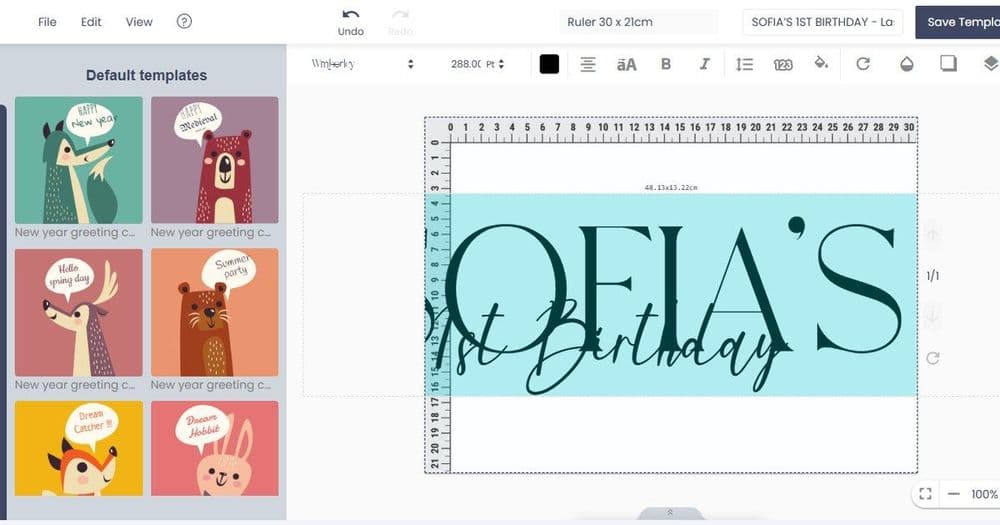
Design and marketing publish approved templates with safe print areas and fixed brand elements. Employees can edit permitted fields — name, title, location — but cannot break the logo, colors, or layout. This is the core control that keeps a distributed team on-brand.
Roles, permissions, and approvals
Different people get different rights: order for themselves, order for a team, or approve requests. Approval steps sit between request and production so budgets and brand standards are enforced before anything prints.
Centralized ordering and reordering
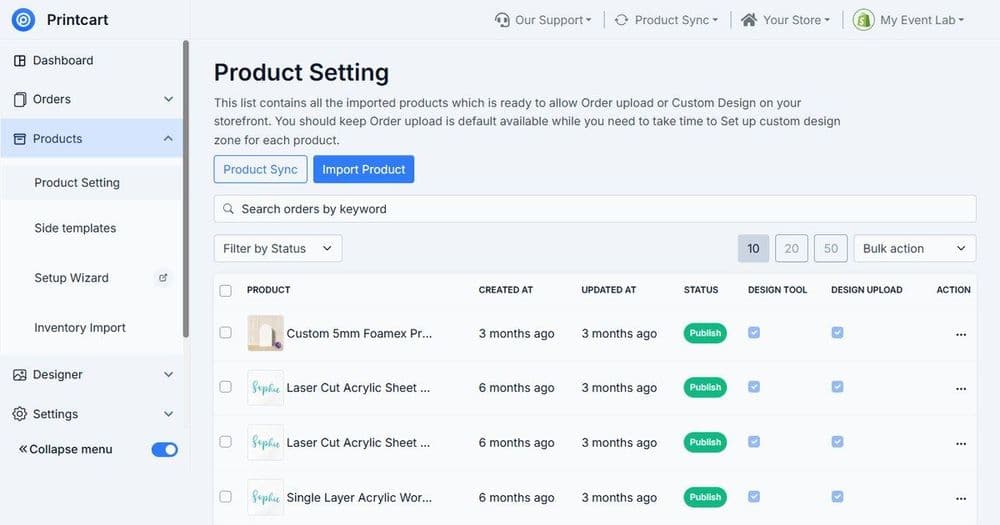
A single portal holds the catalog of orderable print products, so reordering business cards for a new hire or signage for a new office is a few clicks, not a new project each time.
Standard print buying versus a corporate print portal
| Factor | Email-and-PDF buying | Corporate print portal |
|---|---|---|
| Brand consistency | Drifts with every edit | Locked templates enforce standards |
| Approvals | Informal or missing | Built into the order flow |
| Reordering | Recreated each time | Repeat from saved templates |
| Spend visibility | Scattered across teams | Centralized and trackable |
Is the Microsoft 365 app available yet?
A dedicated Printcart app for Microsoft 365 is on the roadmap and not yet published. That does not mean you have to wait to fix corporate print chaos: the same outcomes — locked templates, roles, approvals, and centralized ordering — can be delivered now through a Printcart-powered corporate print portal configured for your organization. If a Microsoft 365 integration is a requirement, tell the Printcart team so your needs shape the rollout. Explore what is available now on the Printcart apps hub, and compare options in which Printcart app fits your platform.
How do you plan a corporate print program?
- Inventory your print products. List cards, letterhead, signage, apparel, and swag that teams reorder.
- Define brand rules. Decide which fields are editable and which are locked on every template.
- Map roles and approvals. Clarify who orders, who approves, and spending limits.
- Plan fulfillment. Confirm production, turnaround, and shipping to multiple locations.
- Start with a pilot. Launch one product line and one department before rolling out company-wide.
How do you roll out corporate print ordering across teams?
Rolling out a corporate print program works best as a staged deployment rather than a company-wide switch on day one. Begin with a single, high-volume product line — business cards are a common starting point — and one department that reorders often, so you can prove the templates, approval steps, and fulfillment before scale exposes any gaps. Use that pilot to lock down which template fields are editable, who approves orders, and what turnaround the fulfillment path actually delivers.
Once the pilot runs cleanly, expand by product line and by team. Add signage, stationery, apparel, and event materials as their templates are approved, and bring in additional departments with their own roles and budgets. Keep a single owner responsible for template governance so brand standards do not drift as more people gain access. Communicate the portal as the one place to order print, which is what replaces the scattered email-and-PDF habit. A measured rollout keeps quality high and gives procurement the spend visibility that justified the program in the first place.
Next best step
Corporate print ordering is a branding-control problem first, so review creating branded merchandise for businesses as you plan templates. When you are ready to build the portal, Printcart offers implementation services to set up templates, roles, approvals, and fulfillment for corporate print ordering.
Planning corporate print ordering? Explore the Printcart apps hub, create a free Printcart account, or talk to the Printcart team about a Microsoft 365 corporate print portal.
Printcart field note
What to verify before you roll out Printcart for Microsoft 365: Corporate Print Ordering
This tutorial is written from Printcart implementation patterns across catalog structure, design controls, and customer personalization. Before treating it as complete, test the workflow with one real product, one real design file, and one real order path.
Printcart for Microsoft 365: Corporate Print Ordering — common questions
What is corporate print ordering, and why does Microsoft 365 matter?
In most organizations, print ordering is messy: teams recreate business cards in a document, tweak the logo, email a PDF to a vendor, and hope the brand survives. Multiply that across departments and locations and you get inconsistent branding, slow turnaround, and no spending control. Corporate print ordering replaces that with a portal where approved templates are the only starting point, employees personalize...
Is the Microsoft 365 app available yet?
A dedicated Printcart app for Microsoft 365 is on the roadmap and not yet published. That does not mean you have to wait to fix corporate print chaos: the same outcomes — locked templates, roles, approvals, and centralized ordering — can be delivered now through a Printcart-powered corporate print portal configured for your organization. If a Microsoft 365 integration is a requirement, tell the Printcart team so...
How do you roll out corporate print ordering across teams?
Rolling out a corporate print program works best as a staged deployment rather than a company-wide switch on day one. Begin with a single, high-volume product line — business cards are a common starting point — and one department that reorders often, so you can prove the templates, approval steps, and fulfillment before scale exposes any gaps. Use that pilot to lock down which template fields are editable, who...
Next steps in Printcart
Connect printcart for microsoft 365: corporate print ordering with catalog setup, templates, production workflows, and implementation support.
Want to put printcart for microsoft 365: corporate print ordering into practice?
Use the related Printcart tool below, or create a free account to start building with the product designer.